
The Future of Marketing Measurement: What's Next for Revenue Intelligence
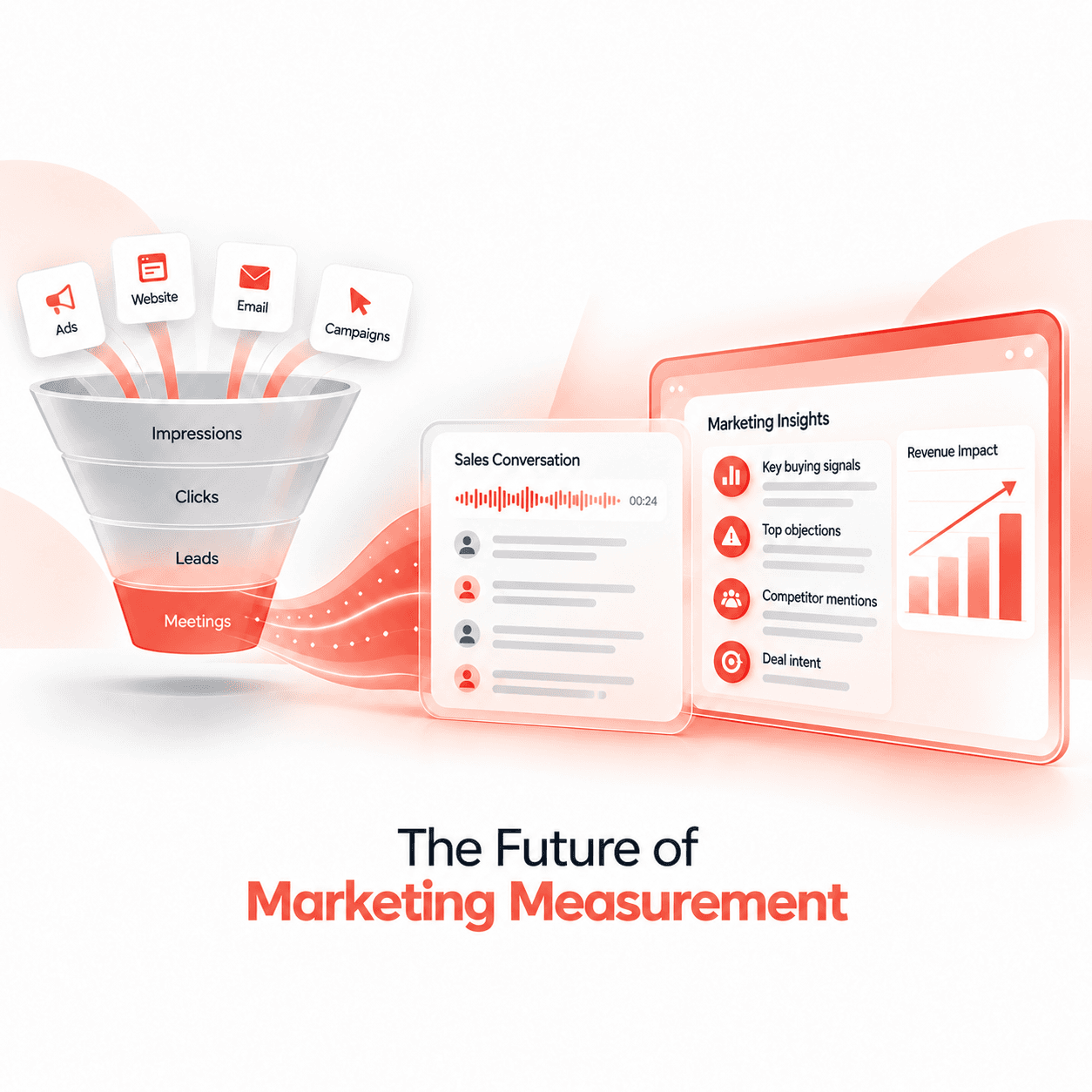
Marketing measurement has spent the last decade getting better at counting clicks, form fills, and campaign touches. What it still struggles to see is what happens after a prospect agrees to a call. The sales conversation is the largest blind spot in the funnel, and bringing it into view is likely to define the next phase of measurement. HireStar.io's Revenue Intelligence System captures that conversation evidence today to help teams close more of their existing pipeline. This post looks at where measurement is heading and the direction we find most promising.
How Is Marketing Measurement Done Today?
Most marketing teams rely on some form of marketing attribution: assigning credit to the touchpoints that preceded a conversion. First-touch, last-touch, and multi-touch models all try to answer the same question, which channel or campaign deserves credit for revenue.
These models are useful, and they have limits. They depend on trackable digital behavior, they struggle with long and complex buying journeys, and they stop at the edge of the sales conversation. A buyer might first hear about a product from a podcast, read three blog posts, and then decide after a conversation with a trusted colleague. Much of that story never appears in an attribution report.
What Is the Biggest Blind Spot in Marketing Measurement?
The biggest blind spot in marketing measurement is the sales conversation. Calls and demos contain some of the most valuable marketing information a company has. Buyers describe their problems in their own words. They explain what they compared you with, what worried them, and what finally convinced them.
Today, most of that information stays with the individual rep who heard it. Marketing sees a lead arrive and a deal close, with little visibility into what happened between the two. The gap shows up as disagreement between teams: marketing believes it sent good leads, sales believes the leads were weak, and neither has evidence beyond their own impressions.
How Has Marketing Measurement Changed Over Time?
Early digital marketing measurement focused on what was easy to count: impressions, clicks, and form submissions. As budgets grew, teams added attribution models to explain which channels deserved credit. More recently, privacy changes and fragmented journeys have made some of that tracking less reliable.
The trend points in one direction. As trackable signals become harder to collect, first-party evidence, meaning information a company gathers directly from its own customers and buyers, grows in value. Sales conversations are among the richest first-party sources a company has.
What Is Next for Marketing Measurement?
The next phase of marketing measurement is likely to be shaped by five shifts:
1. Conversations Become a Data Source
Speech-to-text and language models now make it practical to turn calls into structured, searchable evidence. When that evidence is available across hundreds of conversations, patterns emerge by industry, company size, and use case that no single rep could see.
2. From Credit to Evidence of Influence
Attribution debates focus on who deserves credit. A conversation-informed approach adds another input: what did the buyer actually say influenced them? Their own words become a complement to click data, not a replacement for it.
3. Pipeline Quality Joins Pipeline Volume
Ten thousand leads and ten productive conversations are very different results. Measuring quality, based on what happens in the conversation, can change which campaigns look successful. A smaller campaign that produces strong conversations may outperform a larger one that produces noise.
4. Buyer Language Flows Back into Messaging
The words buyers use to describe their pain are often better copy than anything written in a conference room. Structured conversation data can give marketing a direct line to that language, shortening the distance between what buyers say and what the website says.
5. Sales and Marketing Share One Picture
When both teams look at the same buyer evidence, debates about lead quality become conversations about specific buyers and what they said. That is a healthier basis for planning, budgeting, and alignment.
What Are the Risks of Using Conversation Data for Marketing Measurement?
The main risks of using conversation data for measurement are causality, privacy and consent, context, and overreach. Ignoring them would undermine the whole idea.
- •Causality. A theme that appears often in won deals is not necessarily the reason those deals were won. Conversation patterns suggest where to look, and controlled changes confirm what holds.
- •Privacy and consent. Using conversation data for measurement carries responsibilities around transparency, consent, and data handling. Teams should be open with customers and buyers about how recordings are used.
- •Context. Buyer language varies by industry and company. Models that ignore this will misread it, which is why company-specific approaches matter.
- •Overreach. Not every question needs a conversation-based answer. Measurement should stay as simple as the decision it supports.
How Do You Evaluate a Marketing Measurement Approach?
Whether a method is old or new, a few questions help separate useful measurement from decoration:
- •Does this metric predict revenue, or only describe activity?
- •Can we explain how it was calculated, and would a skeptical colleague accept the reasoning?
- •Does it change a decision? If no decision depends on it, it is probably noise.
- •What does it miss, and have we been honest about that?
- •Is the data collected in a way our customers would consider fair?
What Could Better Marketing Measurement Look Like in Practice?
Imagine a marketing team that reviews recurring themes from sales conversations each month. They notice that buyers in one segment keep asking about a specific integration, while a popular blog post barely mentions it. They update the content, adjust a campaign to speak to that concern, and watch what changes in later conversations: fewer repeated questions, faster movement to next steps.
None of this replaces traditional attribution. It adds a layer of evidence about what buyers actually care about, and makes the connection between marketing effort and revenue less of a guess. This scenario is illustrative, and it captures the shape of the opportunity as we see it.
What New Marketing Metrics Could Conversation Data Enable?
If conversation evidence becomes part of measurement, a few new kinds of metrics become possible. These are examples of where conversation evidence could lead:
- •Share of conversations in which buyers raise a given theme, tracked over time and by segment.
- •How often a particular objection appears before and after a messaging change.
- •The gap between topics your content covers and topics buyers actually ask about.
- •How quickly conversations from different campaigns progress to a concrete next step.
Each of these ties marketing activity to buyer behavior in a more direct way than a click count does, while still requiring careful interpretation.
How Can Marketing Teams Start Using Conversation Insights Today?
You do not need new technology to begin. A manual version of the idea is a useful first experiment:
- 1Listen to a sample of recent sales calls, or ask sales for notes on them.
- 2Write down the three questions buyers ask most often and the three objections that recur.
- 3Compare that list with your campaigns, landing pages, and content. Note what you answer well and what you do not.
- 4Pick one gap and test a change, such as new copy or a new piece of content, and watch what happens in later conversations.
Teams that do this tend to find the same thing: the language of real buyers is more specific and more useful than the language in their own campaigns.
How Does Revenue Intelligence Connect to Marketing Measurement? Where HireStar.io Fits
HireStar.io's Revenue Intelligence System captures and structures the conversation evidence this direction depends on. Today it helps founders and sales teams close more of their existing pipeline, and the measurement ideas in this post show where that evidence can lead.
HireStar.io is an AI research lab building AI-powered revenue systems. The Revenue Intelligence System follows a simple chain, Data → AI → Revenue: it captures conversations with speech-to-text, structures them with language models, and uses company-specific small language models (SLMs) that learn what matters for a given business. Today it helps founders and sales teams close more of the pipeline they already have, including through live guidance during demos and calls.
The measurement ideas in this post describe where the category is heading and the direction we find most promising, and the system works alongside your CRM and existing tools.
Our own experience points to why this direction matters. When we listened to prospect conversations, we heard buyers pushing back on tools that graded their reps and asking instead for help growing revenue. That feedback changed how we position the product, and it came directly from conversation evidence.
How Does Better Measurement Change Marketing Budget Decisions?
Budgets follow measurement. If measurement only sees the top of the funnel, spending drifts toward whatever looks efficient there, even when it produces little that matters later. Better evidence about what happens in conversations gives leaders a more complete basis for deciding where the next dollar or rupee should go.
It also supports more honest conversations about trade-offs. Some programs that look modest on a lead report may produce excellent conversations, and some that look impressive may produce little. Seeing both sides of that picture is a practical advantage.
Frequently Asked Questions About Marketing Measurement
What Is Marketing Measurement?
It is the practice of connecting marketing effort to business outcomes, usually through attribution models that assign credit to touchpoints.
What Is Wrong With Traditional Marketing Attribution?
It depends on trackable digital behavior, struggles with long buying journeys, and stops at the edge of the sales conversation.
How Can Sales Conversations Improve Marketing Measurement?
They record what buyers said about their problems, concerns, and decision, which adds context that click data cannot provide.
How Does HireStar.io's Revenue Intelligence System Relate to Marketing Measurement?
It captures and structures the conversation evidence this direction depends on, while helping founders and sales teams close more of their existing pipeline today. The measurement ideas here describe where the category is heading.
What Are the Privacy Considerations?
Teams need consent, transparency, and careful data handling, and should be open with buyers about how recordings are used.
Key Takeaways: The Future of Marketing Measurement
Marketing measurement is moving from counting touchpoints toward understanding what actually shapes a buying decision. The sales conversation is the richest source of that understanding, and it has been mostly invisible. Handled carefully, with attention to causality and privacy, conversation evidence can help marketing and sales plan from the same picture and connect effort to revenue more honestly. That is the direction HireStar.io's Revenue Intelligence System, built on Data → AI → Revenue, is positioned to keep exploring.
Ready to turn conversation evidence into revenue? Explore HireStar.io's Revenue Intelligence System.