
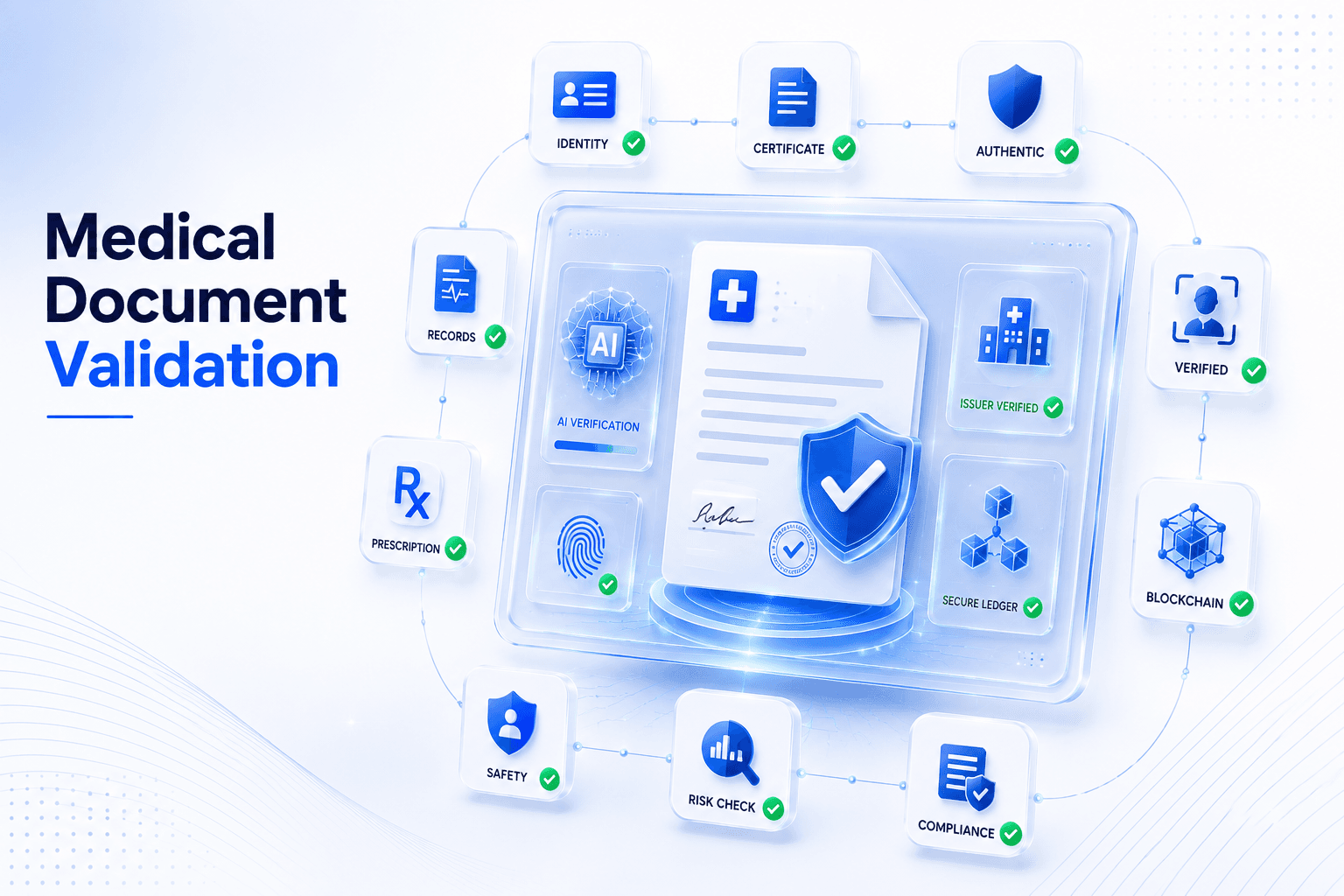
What Is Medical Document Validation, and Why Does It Matter?
Medical document validation confirms that certificates, reports, prescriptions, and fitness documents are genuine, accurate, and actually issued by whoever they claim to be from. It's how organizations avoid fraud, protect workplace safety, and stay on the right side of regulatory requirements — and it's exactly the kind of verification HireStar.io was built to simplify for HR and compliance teams.
What Does Medical Document Validation Actually Involve?
Medical document validation is a structured check confirming that submitted medical documents are real, accurate, and traceable back to a licensed professional or institution. In practice, this usually covers:
- •Medical certificates and fitness-for-duty reports
- •Prescriptions and diagnostic results
- •Hospital discharge summaries and treatment records
- •Medical bills and insurance-related paperwork
The point isn't bureaucracy for its own sake — it's making sure decisions like employment eligibility, insurance payouts, or compliance sign-offs rest on evidence that actually holds up.
Why Medical Document Validation Deserves Real Attention
It Confirms Claims Are Genuine
Validation catches forged or altered records before they're acted on — fake certificates, doctored prescriptions, fabricated reports — and keeps health-related decisions grounded in real clinical evidence.
It Protects Workplace Safety
In safety-sensitive roles, medical fitness isn't a formality. Confirming an employee is genuinely fit for the job reduces accident risk in industries like manufacturing, aviation, and healthcare, where an undisclosed condition can have real consequences.
It Cuts Down HR and Insurance Fraud
Fake sick leave claims and inflated reimbursement requests add up fast. Catching them protects both company finances and the broader insurance pool.
It Keeps Organizations Compliant
Plenty of industries legally require verified medical clearances. Validated records mean audit readiness and a lot less exposure to penalties or legal disputes down the line.
It Keeps Operations Running Smoothly
Unverified documentation makes workforce planning messy. Validated records mean accurate absence tracking, fair benefit usage, and fewer disruptions to daily operations.
How Does Medical Document Validation Actually Work?
- 1Document Collection – Medical documents come in with proper employee or patient consent.
- 2Authenticity Check – The system screens for alterations, inconsistencies, or signs of forgery.
- 3Issuer Verification – Doctors and hospitals get cross-checked against official registries, not just taken at their word.
- 4Data Accuracy Review – Dates, diagnoses, and signatures are checked for consistency.
- 5Secure Reporting – A validation report goes out to HR, compliance, or insurance teams for final review.
How HireStar.io Simplifies Medical Document Validation
HireStar.io automates and secures this entire process:
- •AI-powered analysis flags tampering, edits, or forged content in medical reports automatically.
- •Real-time registry checks confirm doctors and hospitals against official databases.
- •Encrypted, privacy-first handling aligned with HIPAA, GDPR, and similar standards.
- •Live dashboards give HR and compliance teams a clear view of validation status without chasing updates manually.
The result is less manual back-and-forth, faster turnaround, and stronger accuracy — without compromising confidentiality.
Who Actually Benefits from Medical Document Validation?
- •Healthcare and Hospitals – Verifies practitioner credentials and patient records, supporting both patient safety and compliance.
- •Manufacturing and Construction – Confirms genuine fitness-for-duty in high-risk environments, cutting down on workplace accidents.
- •Aviation and Transportation – Validates medical fitness for pilots, drivers, and operators against strict safety regulations.
- •Corporate Offices and Insurers – Prevents fraudulent medical claims and reimbursements while keeping leave management fair.
- •Government and Public Institutions – Ensures compliance with public safety and employment regulations through transparent, auditable verification.
FAQs: Medical Document Validation
- •What exactly is medical document validation? It's the process of confirming medical records are authentic and accurate, so fraud gets caught and compliance stays intact.
- •Why does it matter so much? It protects organizations from fraud, keeps workplaces safe, and supports the regulatory and insurance decisions that depend on accurate health data.
- •What kinds of documents get validated? Medical certificates, prescriptions, diagnostic reports, hospital records, and medical bills, most commonly.
- •Can this process be automated? Yes — platforms like HireStar.io handle document checks, issuer verification, and fraud detection digitally and securely.
- •Is this legally required? In many regulated industries, yes — particularly where occupational health, insurance, or compliance obligations are involved.
Conclusion: Trust Starts With Verified Records
Medical document validation is a real safeguard against fraud, safety risk, and regulatory exposure — not a box-checking exercise. HireStar.io's AI-powered platform gives HR and compliance teams the speed and accuracy they need to verify medical records with confidence, protecting employees and organizations alike.